
- Articles
- Commonweal
- TIME – Reviews
- TIME – Articles
- TIME – Cover Stories
- TIME – Foreign News
- Life Magazine
- Harper’s: A Chain is as Strong as its Most Confused Link
- TIME – Religion
- New York Tribune
- TIME
- National Review
- Soviet Strategy in the Middle East
- The Coming Struggle for Outer Space
- The Left Understands the Left
- To Temporize Is Death
- Big Sister Is Watching You
- Springhead to Springhead
- Some Untimely Jottings
- RIP: Virginia Freedom
- A Reminder
- A Republican Looks At His Vote
- Some Westminster Notes
- Missiles, Brains and Mind
- The Hissiad: A Correction
- Foot in the Door
- Books
- Poetry
- Video
- About
- Disclaimer
- Case
- Articles on the Case
- Hiss Case Coverage: TIME 1948
- Hiss Case Coverage: TIME 1949
- Hiss Case Coverage: TIME 1950
- Hiss Case Coverage: TIME 1951
- Hiss Case Coverage: TIME 1952
- Trial by Typewriter
- I Was the Witness
- The Time News Quiz
- Another Witness
- Question of Security
- Fusilier
- Publican & Pharisee
- Recent & Readable
- Recent & Readable
- Kudos
- Letters – June 16, 1952
- Readable
- Letters – June 23, 1952
- Recent & Readable
- Recent & Readable
- Recent & Readable
- Nominee for Veep
- Recent and Readable
- Recent and Readable
- Democratic Nominee for President
- Recent & Readable
- Recent & Readable
- Fighting Quaker
- Recent & Readable
- Recent & Readable
- Recent & Readable
- Timely Saints
- Nixon on Communism
- People
- Who’s for Whom
- 1952 Bestsellers
- Letters – December 15, 1952
- Year in Books
- Man of Bretton Woods
- Hiss Case Coverage: TIME 1953
- Hiss Case Coverage: TIME 1954
- Hiss Case Coverage: TIME 1955
- Hiss Case Coverage: TIME 1956-1957
- Private
About
This is the official website of Whittaker Chambers.
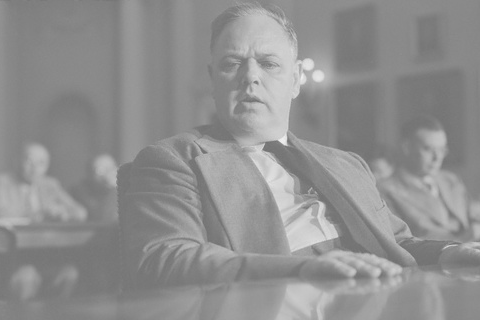
[Whittaker Chambers before HUAC on August 03, 1948]
Whittaker Chambers (1901-1961) was an American writer and editor. Born in Philadelphia, he grew up in Lynbrook, Long Island, and studied at Columbia. In 1925, he joined the Workers Party of America (a legal cover for the Communist Party) and worked as an editor at the Daily Worker newspaper and New Masses magazine (1926-1932). In 1932, he joined the Soviet underground as an agent, eventually running a spy ring in Washington, DC.
After defecting in 1938, he joined TIME magazine, where he rose to senior editor (1939-1948). In 1948, Chambers appeared under subpoena before the House Un-American Activities Committee (HUAC) as a Federal witness in what became the Hiss Case (1948-1950). He worked briefly for the nascent National Review. He died two years later on his Westminster, Maryland, farm before publishing more.
Chambers’s memoir Witness (1952) became a best-seller. During the 1920s and 1930s, he translated more than a dozen books from German and French (including Bambi, 1928). There are two unauthorized books of his private letters (Odyssey of a Friend, Notes from the Underground). His wife published a second memoir, Cold Friday (1964) posthumously.
The Hiss Case launched the career of a young Richard Nixon, while Chambers himself has become an icon among Conservative adherents due largely to the efforts of William F. Buckley, Jr. Chambers received the Presidential Medal of Freedom posthumously in 1984, and his farm went on the National Historic Register in 1988.


Nice post on WSJ about Bambi.
[…] but also recommends a different approach to comparing protagonist Duncan Chaplin Lee — not to Whittaker Chambers but to Alger […]
[…] Whittaker Chambers, who wrote TIME’s review of the movie in 1940, he wrote: The man who reviewed The Grapes of […]
[…] today, TIME magazine published a controversial article edited by its then Foreign News desk editor, Whittaker Chambers. It analyzed the recall of U.S. general Stilwell from China as head of the Chinese nationalist […]
[…] Benn Steil‘s book The Battle of Bretton Woods contains a common mistake about my grandfather, Whittaker Chambers. (Read […]
[…] Benn Steil‘s book The Battle of Bretton Woods contains a common mistake about my grandfather, Whittaker Chambers. He did not defect in 1938 “after a religious revelation”. He left for a variety of […]
[…] got him a longer term job at the Treasury. Sometime after this, White began passing information to Whittaker Chambers, a GRU agent. One memorandum in White’s handwriting survives, and though it contains little […]
[…] describes Whittaker Chambers more simply as a “senior editor at TIME magazine… called by the House Committee on […]
[…] seven decades ago, Whittaker Chambers wrote TIME‘s cover story “Christmas […]
[…] About […]
[…] holds the Whittaker Chambers Farm “private property, not open to the public.” Further, Whittaker Chambers (my grandfather) never claimed his farm meant much to the outside world. He described it as […]
[…] Bedacht, the man who recruited Whittaker Chambers into the Communist underground, died 50 years today on July 4, […]
[…] for Commonweal magazine, Whittaker Chambers continued his musings on the meaning of history with this article in September 1952. After some […]
[…] what turned out to be his final article for National Review, Whittaker Chambers predicted Google (he mentioned “googols) and the Internet as he described the modern marvels […]
[…] of Whittaker Chambers‘s last articles defended the rights of Alger Hiss: read “The Hissiad: A […]
[…] one of the last pieces Whittaker Chambers wrote for National Review, he turns again to the space race, whose missiles threatened human […]
[…] whether White was involved in espionage, perhaps it is worth revisiting early insight from Whittaker Chambers (my grandfather). Although in Witness he tended to write off White like other New Dealers — […]
[…] the 1958 elections, Whittaker Chambers recalls “a peculiarly braced sobriety” for a Democratic sweep the 1952 elections, […]
[…] Review printed an article on the 50th anniversary of Whittaker Chambers‘ death that the Whittaker Chambers Family found most disappointing. As its author has updated […]
[…] Whittaker Chambers reminisces about the (then) late Mrs. Leon Freedom AKA Virginia Freedom of Baltimore, who bumped in him in a Baltimore department store, starting “Mr. C? I must talk to you.” […]
[…] Whittaker Chambers was born this day in Philadelphia, Pennsylvania: today would be his eleventy-first birthday. […]
[…] About […]
[…] UN speech by President Dwight Eisenhower sparked Whittaker Chambers to express continued concerns for crises in the Middle East, which he connected to the […]
[…] About […]
[…] About […]
[…] About […]
[…] About […]
Hello Mr. Chambers.
My husband and I are both nearly finished reading Witness.
I feel like the teenage Jewish kid who tried rather pitifully to express his gratitude and respect for your grandfather. It’s impossible to describe how deeply moving and informative I find the book. I am right now avoiding finishing the last 50 or so pages because I don’t want it to end and because my affection for Whittaker Chambers is so great. Silly, but true.
Along the way I’ve been transcribing sections here and there, and emailing to friends. This is the most recent excerpt I chose, and perhaps my favorite of all:
[excerpt from page 617]